When Ursula von der Leyen and António Costa step off their plane in Beijing later this month, they will be met not by red carpets but by a gauntlet of tough questions: can Europe close a €305 billion goods‐trade gap without splintering into twenty-seven mini-negotiators? Behind the scenes in Brussels, capitals buzz with anticipation and anxiety. Some eye shiny Chinese gigafactories; others are poised to deploy Brussels’ new Anti-Coercion hammer. The stakes could not be higher: from rare earths to electric vehicles, from farm goods to medical devices, this summit will test whether the EU can negotiate as one or fracture into a chorus of solo acts.
1. Trade Tumble: €305 Billion and Counting
By year-end 2024, EU goods imports from China hit €518 billion, while exports languished at €213 billion leaving a yawning €305 billion deficit, the largest on record. That shortfall climbed from €111 billion a decade earlier and, seasonally adjusted, peaked at €47 billion in spring 2023 before ebbing to €36 billion in early 2024.
China now supplies 21.3% of all extra-EU imports but takes only 8.3% of exports. Among imports, chemicals top the list at €44 billion (8.5%), followed by manufactured goods (€14 billion), crude materials (€10 billion) and agri-food (€6 billion). On the export side, machinery and transport eke out gains, yet overall exports to China fell 4.6% in 2024, underscoring intensifying competition.
Fluctuations are dramatic, in January 2024, EU imports from China slipped to €36 billion, only to rebound past €44 billion by May. Exports swung between €16 billion in October 2023 and just over €21 billion in February 2023. Behind these shifts lie Covid-era supply swings, geopolitical jitters and tariff skirmishes.
To chip away at this imbalance, Brussels wants reciprocal market access: fewer non-tariff barriers on European cars, pharmaceuticals and services in China; more Chinese purchases of EU high-value goods. Yet Beijing’s blue-print veers toward import substitution and industrial self-reliance, dampening EU hopes of swift trade correction.
2. Rare-Earth Roulette: Europe on China’s Table
Europe imported just 12,900 tonnes of rare earth elements (REEs) in 2024, down 29% from the previous year, and exported 5,500 tonnes. Almost half of those imports (about 6,000 tonnes) came from China, despite Brussels’ push to diversify. At a total value of €101 million, these raw materials power everything from electric-vehicle motors to wind turbines, giving China a strategic chokehold.
In 2023, whispers of Chinese export curbs sent light-rare-earth oxide prices soaring by 60% overnight. Europe’s response was the March 2023 Critical Raw Materials Act, which aims to cap single-country reliance at 65% by 2030 and boost EU-based processing to cover 45% of needs. Yet building mines and factories takes years, and billions in up-front investment.
Some capitals are heeding the call: a Spanish-Swedish consortium is investing €1.2 billion in a processing plant in northern Sweden; Finland has green-lit permits for a €700 million mine. But the bulk of new projects remain at the drawing-board stage, leaving Brussels vulnerable. China, meanwhile, signals that any tightening of REE exports will prompt price spikes and supply delays, an implicit threat the EU must neutralize if it wants genuine leverage in Beijing.
3. EV Face-off: A New Battleground
For European automakers already wrestling with emissions rules, Chinese battery-electric vehicles (BEVs) present a fresh headache. In January–February 2025, over 50,000 Chinese BEVs entered the EU, even after provisional tariffs of up to 45% were slapped on battery-powered imports in mid-2024. Plug-in hybrids (PHEVs), which face only about a 10% duty, surged 892% to 25,900 units, undercutting BEVs by a €6,000–€8,000 tariff gap.
A typical BYD Atto 3 BEV incurs roughly €10,000 in duties when sold in Germany, compared with €4,000 for a Seal U PHEV—on a sticker price that is itself €6,000–€8,000 lower than equivalent European models. The net effect: Chinese brands can underprice their rivals by 20–25%, eroding margins and market share.
European incumbents are scrambling. VW Group is racing to convert its Zwickau factory for battery production; Stellantis is weighing a €2 billion gigafactory in Poland; Renault has pledged €1.8 billion to its Douai plant. But Beijing counters with sweetened loans and grants: Hungary alone received 44% of all Chinese FDI into Europe in 2023—about $16 billion—much of it earmarked for EV battery projects in Debrecen and Szeged.
In Debrecen last spring, the mayor cut the ribbon on a €7.5 billion CATL battery plant—boasting it would power half of Europe’s EV fleet—unfazed by Brussels’ looming trade-defense probe. That image looms large in Beijing’s playbook, as it signals to other capitals that self-interest trumps bloc solidarity every time.
4. Farm to Pharma: Under-the-Radar Risks
Beyond cars and chips, China’s low-cost edge in agriculture and medical devices poses underappreciated threats. EU imports of Chinese food and live animals reached €6 billion in 2024 (1.2% of total), yet European agri-food exports to China dropped 4.6%, denting incomes in Spain, France and the Netherlands. Sanitary barriers and quota limits remain stubbornly high.
In medical devices, where Europe once dominated, imports from China climbed to €5.2 billion, accounting for 13.4% of extra-EU purchases. Beijing’s respirators, bandages and diagnostic kits are 30–40% cheaper than European equivalents. Brussels has begun banning Chinese bidders from public tenders above €5 million—covering roughly €60 billion of contracts—but enforcement is patchy, and national health authorities fret over supply shortages.
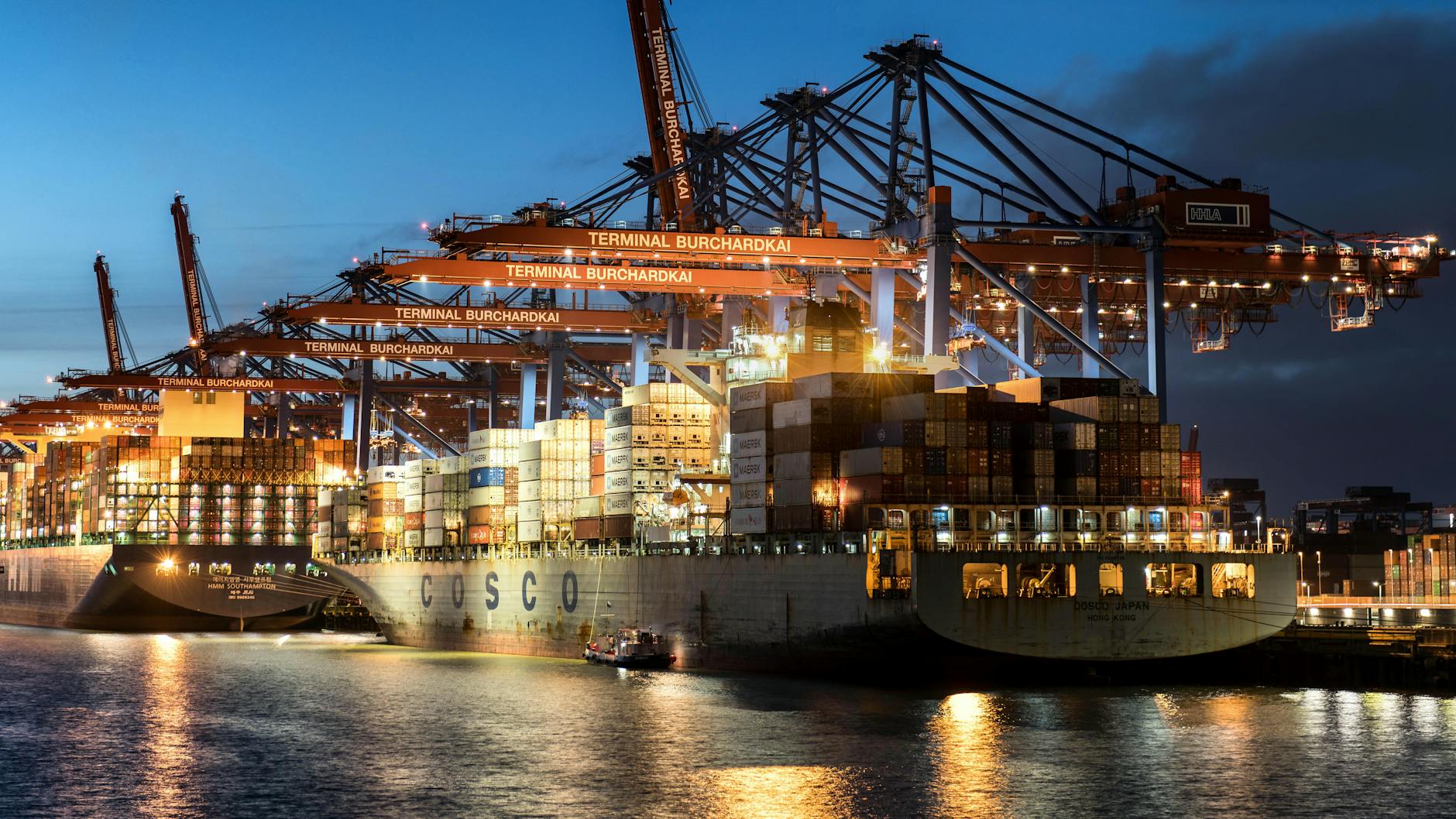
Dockworkers in Piraeus now swap tales of Cosco’s crimson-and-gold cranes, each container an emblem of creeping Chinese influence. As ports like Trieste and Piraeus become Beijing’s beachheads, member states find themselves torn between immediate jobs and long-term strategic costs.
5. Divide-and-Rule: The Hungary Gambit
China’s “divide-and-conquer” strategy thrives on bilateral backchannels. Hungary, long dubbed Beijing’s “all-weather friend,” joined the Belt and Road Initiative in 2015 and by 2023 had bilateral trade of €10 billion. It hosted a $2.1 billion loan for a BRI rail link and drew 44% of Chinese FDI into Europe, about €16 billion, much of it for battery and EV projects.
Budapest’s steadfast blocking of EU statements on Hong Kong and human-rights abuses forces Brussels into 27+1 huddles, diluting collective pressure. Not far away, Italy and Greece have opened their ports. Cosco’s Piraeus venture has seen over €1 billion in expansions since 2016; Trieste attracted €1.1 billion in Chinese infrastructure loans. Beijing points to these outliers and asks, “Why tighten rules if some members benefit?”
In Poland, a proposed partnership between Stellantis and Leapmotor was held hostage by a Beijing hint to shift operations to Germany or Slovakia, if Warsaw insisted on anti-dumping solidarity. Such maneuvers underscore the ease with which China sidesteps unified EU action, trading concessions with a willing capital rather than the bloc at large.
6. Beijing 2025: All or Nothing
The 25th EU–China summit, on July 24–25 in Beijing, is less a ceremonial milestone than a make-or-break moment. Xi Jinping, flaunting China’s global heft, will press for easier European imports of its cars and chips, fewer critical-mineral restrictions and a narrative bulwark against US unilateralism. For his part, António Costa will seek firmer market access, lower auto tariffs, looser pharma quotas, and clearer guarantees on rare-earth exports.
But unity cannot be taken for granted. Mixed signals from capitals undercut Brussels’ red lines. If Ursla von der Leyen fails to muster unanimous support on even basic talking points, China will pounce on fissures. The summit hall will echo not with chants of one Europe, but with competing pleas, a scenario Beijing relishes.
Success demands a single, unambiguous EU stance, backed by the promise of carrots and the threat of sticks. Anything less risks turning a golden anniversary into a pyrrhic photo-op.
7. Carrots & Coercion: Brussels’ Playbook
Brussels’ playbook begins with a suite of carrots designed to reward solidarity. Under the Global Gateway program—an envelope of €79 billion running from 2021 to 2027—eligibility for national sub-projects will be strictly limited to capitals that uphold the agreed EU China policy. That means priority co-investment in high-value ventures, whether rare-earth separation facilities, electric-vehicle battery parks or green-energy corridors will flow only to compliant states. At the same time, procurement pools financed by Brussels will shut out any firms tied to bilateral Belt & Road deals, reserving lucrative EU-funded tenders for those who refuse to pursue side-deals with Beijing. And for those capitals that demonstrate unwavering support, Brussels will confer prestige as well as policy: rotating the chairmanship of its high-profile “27 + 1” working tables—on the Indo-Pacific, tech security and clean energy—among the most steadfast members.
On the stick side, the EU will wield its new defensive tools with equal resolve. Brussels has already signaled that its Anti-Coercion Instrument would be activated should China ever threaten to choke off rare-earth supplies or apply punitive measures against an individual member. Meanwhile, the Foreign Subsidy Regulation is ready to scrutinize—and, where necessary, unwind—any Chinese-backed takeover in strategic industries. And behind the scenes, provisional tariffs on Chinese electric vehicles and steel remain on standby, prepared to escalate at a moment’s notice if market-access talks falter.
All of this is anchored by new governance structures. A formal “27 + 1” Forum will meet quarterly, mandating each capital to submit detailed risk profiles and ensuring that policy isn’t made behind closed bilateral doors. A European China House in Brussels will coordinate strategy, industry input and civil-society consultations. And every member state will be required to conduct national risk assessments—mapping vulnerabilities in infrastructure, technology and critical supplies—so that Brussels can maintain a shared, up-to-date de-risking playbook rather than chasing surprises.
The Final Word
Europe’s €305 billion trade deficit, its dependence on Chinese rare earths and the surge of low-cost Chinese EVs and medical goods make unity a strategic imperative. By fusing conditional access to €79 billion of Global Gateway funds with the credible threat of Brussels’ new defensive toolkit—and embedding every capital in a formal “27 + 1” governance loop—the EU can turn internal alignment into external leverage. Only a united bloc, wielding both carrots and coercion, will compel China to open its markets, curb dumping and deliver genuine reciprocity. Anything less leaves Brussels bargaining in fragments—and Europe, once again, on the back foot.
Leave a Reply