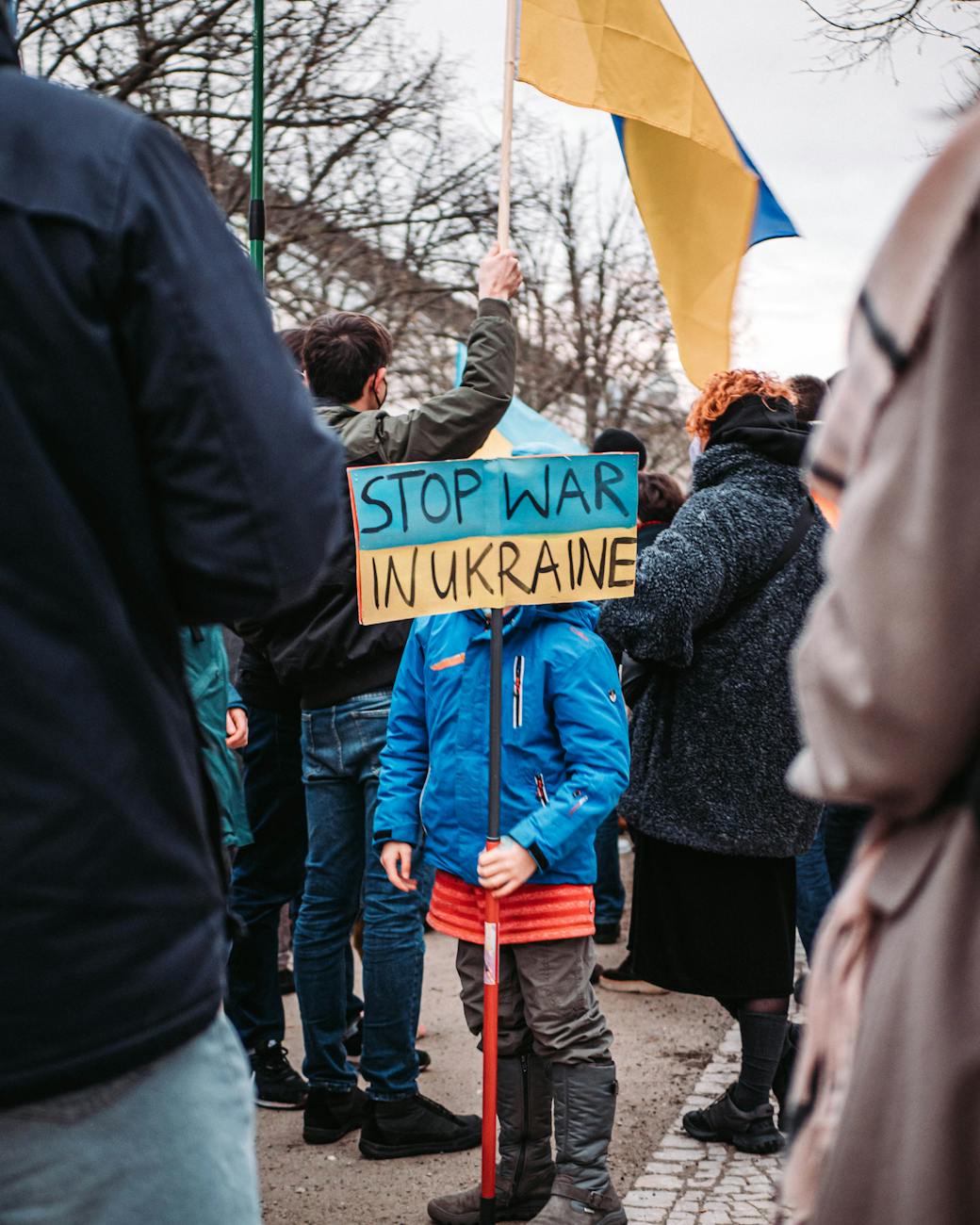
The war in Ukraine—once a testament to a Russia hailed as an unstoppable military power—has transformed into a protracted struggle defined by a remarkable display of resilience. Through a combined $380 billion aid package from the United States and Europe, Ukraine has not only held the line but has systematically ground Russia’s ambitions to a halt. While the West has managed to sustain its economies amid this support, Russia’s ailing war machine and faltering economy have been forced into an untenable position. With the conflict now entering its third year, America stands at a pivotal moment, ready to impose a ceasefire on its own terms—one that not only secures Ukraine’s future but also ensures that any future Russian regime is effectively neutered from launching another aggressive bid for power.
The War That Transformed Perceptions
In the aftermath of Crimea’s annexation in 2014, the Kremlin had gradually set the stage for a dramatic escalation along Ukraine’s borders. For years, border skirmishes and incremental incursions had laid a foundation for what many believed would be a rapid conquest. In February 2022, emboldened by past successes and steeped in the belief that a swift victory was inevitable, Russian forces launched a full-scale invasion. The expectation was clear: a massive, well-equipped military force would sweep aside Ukrainian resistance, with Kyiv falling in a matter of days.
Yet reality diverged sharply from expectation. The initial Russian blitz, hampered by logistical missteps and a deeply flawed supply chain, soon met the fierce, unified resistance of Ukraine—a resistance sustained not only by the resolve of its people but by the lifeline of relentless American and European aid. This international support, amounting to a staggering $380 billion, provided Ukraine with the modern weaponry, advanced technology, and strategic resources necessary to transform a conventional conflict into a grinding war of attrition. Suddenly, a nation once considered vulnerable was the architect of a defensive masterpiece, forcing a previously dominant military power into a humiliating quagmire.
The dynamics of the conflict shifted rapidly. Whereas the Russian strategy had rested on swift domination, it soon became clear that Ukraine’s tenacity and the unwavering commitment of Western allies had rendered that approach obsolete. Instead of an easy conquest, Moscow found itself embroiled in a conflict that bled resources, strained its military capabilities, and eroded the very pride on which its regime had long depended. The West’s ability to sustain aid without significant collateral damage to its own economies stands in stark contrast to the heavy price Moscow pays in lost lives, crippled infrastructure, and a deepening economic crisis.
Attrition and the Crumbling Kremlin Economy
As the conflict dragged on, what was once a campaign of rapid aggression evolved into a war of attrition. Early in the fighting, Russian forces had managed to capture approximately 27% of Ukrainian territory. However, months of intense combat, shifting battle lines, and unrelenting Ukrainian counteroffensives have reduced that figure to 19%—a plateau that has held since November 2022. This stark contraction is more than a mere statistic; it is the physical manifestation of a strategy that has become increasingly unsustainable.
Leading research centers and influential think tanks have estimated that Russia’s military casualties—encompassing both wounded and dead—have reached roughly 800,000. These numbers speak to a generational loss in a nation already burdened by demographic decline. Each setback on the battlefield has not only diminished Russia’s territorial control but has also sown the seeds of long-term political and social instability.
The economic ramifications are equally severe. Major urban centers such as Mariupol, Popasna, Bakhmut, and Marinka now lie in ruins. Moreover, critical infrastructure—exemplified by the strategic Kakhovka Dam—has been devastated. The total cost for reconstruction is estimated at $524 billion, a figure that looms at nearly 24% of Russia’s annual GDP. With its economy already reeling from plummeting energy revenues, crippling labor shortages, and international isolation via sanctions and exclusion from global payment systems, Russia now finds itself caught in a downward spiral.
This grim reality echoes a warning first articulated by President Dwight Eisenhower:
“Every gun that is made, every warship launched, every rocket fired signifies, in the final sense, a theft from those who hunger and are not fed.”
In the modern context, this observation rings true as the immense cost of war not only depletes military resources but also diverts funds away from critical social and economic needs. Russia’s inability to muster the economic strength to match Western resilience underscores a central truth: the Kremlin’s grand ambitions are being undercut by the inescapable arithmetic of attrition.
Putin’s Negotiation Theater: Pride Amid Decline
Despite mounting losses on the battlefield and an economy under siege, President Vladimir Putin continues to project an image of unwavering strength. In public statements and high-stakes negotiations, he has repeatedly highlighted selective successes—such as advances in the Kursk region—to mask the broader reality of a regime in retreat. This narrative, carefully curated for domestic consumption, is designed to bolster his standing and maintain the illusion of invincibility, even as the facts on the ground tell a different story.
Putin’s insistence on projecting strength is reminiscent of Cold War-era strategies, where political posturing often obscured strategic vulnerabilities. In his most recent responses to preliminary ceasefire proposals, Putin has emphatically rejected any plan that does not accord him equal weight at the negotiation table. His approach is rooted in a deep-seated need to maintain both personal and institutional pride. For him, any concession—no matter how minor—could signal a weakening of his regime’s legitimacy.
Yet such overblown narratives come at a cost. By overstating his military successes, Putin risks alienating both his domestic audience and international partners who are increasingly aware of Russia’s economic and strategic shortcomings. The Kremlin’s focus on manufactured victories not only delays necessary reforms but also obscures the urgent need for a pragmatic resolution to a conflict that has already exacted an unsustainable toll. As Moscow clings to its antiquated rhetoric, it finds itself increasingly isolated on the global stage—a nation whose aggressive posturing now contrasts starkly with the undeniable resilience of its adversaries.
U.S. Strategy and Ceasefire Conditions: Leveraging Unmatched Resilience
Faced with a conflict that has devolved into a battle of attrition, U.S. policymakers are confronted with a clear imperative: to harness America’s unparalleled economic and military strength and compel Moscow to the negotiation table on terms that reflect the stark realities of the war. The strategy is twofold: to sustain and escalate Western aid that has already ground Russian forces into a defensive impasse, and to impose a rigorously structured ceasefire that both punishes Russia for its continued aggression and offers carefully calibrated economic incentives for compliance.
At the heart of this strategy is a commitment to credibility. The United States, bolstered by robust alliances with European partners, has demonstrated that it can deliver sustained military and economic support without compromising the long-term health of its own economies. This resilience has enabled Ukraine to turn the tide of a conflict that, on paper, seemed destined for a rapid Russian victory. With every passing month, the evidence mounts: while Russia struggles to replenish its dwindling resources and mend its fractured economy, the West continues to invest in Ukraine’s future.
The proposed ceasefire must therefore be more than a temporary halt in hostilities—it must serve as a comprehensive framework for a lasting peace that addresses both security and economic dimensions. Such a ceasefire should include the following key elements:
- Security Guarantees for Ukraine:
Ukraine must receive robust assurances that its sovereignty will be respected. This includes the establishment of demilitarized zones along contested borders, strict international monitoring protocols (potentially involving OSCE or NATO observers), and binding commitments to prevent the rearmament of Russian proxy forces in any annexed territories. Security guarantees should also involve reparations or compensation mechanisms to rebuild critical infrastructure and support displaced populations. - Punitive Measures for Russian Aggression:
The ceasefire must serve as a clear rebuke to Russia’s continued belligerence. This means that any violation of the agreement would trigger immediate punitive measures, including targeted sanctions, asset freezes, and international legal actions. Such measures are designed to ensure that Moscow bears the full economic and political cost of its actions, thereby dissuading future escalations. - Conditional Economic Incentives for Russia:
While Russia has long been isolated by sweeping sanctions, a well-structured ceasefire can open the door to a gradual reintegration into the global economy—provided that Russia meets stringent conditions. In exchange for verifiable and sustained compliance with the ceasefire, Russia should be offered phased reductions in sanctions, opportunities for renewed trade partnerships, and access to international financial institutions. These incentives must be clearly conditional: only upon demonstrable and lasting behavioral change should Russia reap the benefits of economic normalization. - Mechanisms to Deter Future Aggression:
Beyond addressing the immediate conflict, the ceasefire must incorporate long-term safeguards to ensure that future regimes—whether led by Putin or his successors—are effectively deterred from launching similar campaigns of aggressive expansion. This could involve the creation of an international security framework tailored to Eastern Europe, the codification of new diplomatic norms, and ongoing monitoring and verification protocols. The goal is to “neuter” any residual aggressive impulses within the Kremlin by ensuring that the costs of future conflicts far outweigh any potential gains.
By coupling these security guarantees with conditional economic incentives, the ceasefire proposal aims to recalibrate the balance of power in a manner that rewards compliance and punishes transgression. The West’s ability to sustain aid and economic strength stands in stark contrast to Russia’s encumbered war economy—a dichotomy that provides the leverage needed to force Moscow into negotiations on American terms.
A Calculated Path Forward
The war in Ukraine has long since evolved from a conventional contest of military might into a high-stakes war of attrition—one where the combined resolve of Western allies has turned a once-feared Russian juggernaut into a beleaguered force facing an impossible calculus. As Moscow grapples with a deepening economic crisis and mounting losses on all fronts, the time has come for the United States and its partners to press forward with a clear, uncompromising strategy: force a ceasefire that is as much a repudiation of past aggression as it is a blueprint for future stability.
This ceasefire must be comprehensive. It should guarantee Ukraine’s security through robust, internationally monitored measures while imposing immediate and lasting penalties on Russia for its continued acts of aggression. Simultaneously, it must offer Russia conditional economic incentives—a phased approach to sanction relief and renewed trade opportunities—designed to reintegrate Moscow into the global economy only after verifiable progress is made toward lasting peace. Such a dual-track approach not only forces Russia to confront the unsustainable costs of its ambitions but also mitigates the risk that a future regime, regardless of who leads it, might seek to revive old patterns of expansionist aggression.
America’s strategy, grounded in credibility and unwavering support for its allies, is clear: the West’s economic resilience and strategic unity have already proven that it can sustain a prolonged commitment to Ukrainian freedom. By translating this strength into a rigorously structured ceasefire proposal, Washington can compel Moscow to accept a deal that reflects the new geopolitical reality—a reality in which unilateral aggression is met with coordinated, decisive pressure and where economic incentives are inextricably linked to compliance and peace.
The stakes could not be higher. A ceasefire crafted on these terms would not only end the immediate cycle of violence but also lay the foundation for a long-term security architecture in Eastern Europe—one that deters future conflicts and fundamentally weakens the appeal of aggressive, expansionist regimes. In doing so, it would serve as a powerful reminder that in the modern world, might alone is no longer enough; sustainable peace is built on the pillars of mutual accountability, verified compliance, and the interdependence of economic prosperity and security.
In this decisive moment, the legacy of Western resolve—and the lessons of decades of Cold War diplomacy—must guide our actions. The international community has witnessed the transformative power of sustained support, and now is the time to channel that momentum into a comprehensive peace framework. The cost of inaction remains unacceptably high: continued conflict would only further destabilize an already volatile region and embolden future aggressors. Conversely, a well-calibrated ceasefire represents not merely an end to hostilities, but a new beginning—a chance to rebuild trust, foster economic interdependence, and ensure that the aggressive impulses of the past are replaced by a future defined by stability and shared prosperity.
The path forward demands clarity, resolve, and a willingness to leverage every asset at our disposal. For the United States, its European allies, and the people of Ukraine, the choice is stark: maintain the pressure and force a ceasefire that is as innovative as it is punitive, or risk ceding ground to a regime that has already shown its vulnerability. In embracing a strategy that marries unwavering support for Ukraine with a disciplined, balanced ceasefire framework, the West can ensure that the hard-won gains of the past three years are not squandered, and that the future of Eastern Europe is secured against any revival of aggressive expansionism.
Leave a Reply