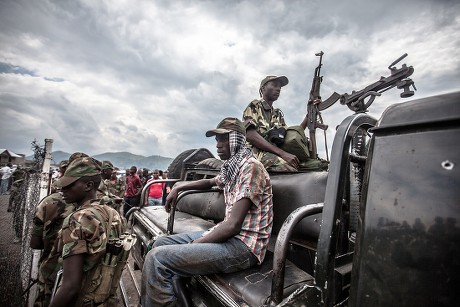
In a dramatic escalation of a conflict that has simmered for decades, the Rwanda‐backed March 23 Movement (M23) recently seized Goma—eastern Congo’s principal city and humanitarian hub. The capture of Goma, long symbolic of both the region’s volatile mineral wealth and its fractured political order, marks not only a military victory for the rebels but also a stark signal that longstanding regional grievances have reached a critical juncture. Let’s examine why M23 has pursued this objective, the historical underpinnings of Rwanda’s involvement in Congo, why recent events have proved decisive, whether the violence in Goma has abated, and what high‐level diplomatic pronouncements—such as those by U.S. Secretary of State Marco Rubio—mean for American interests and the broader international order.
Historical Context: M23 and Rwanda’s Calculated Gamble
M23 emerged in 2012 from the chaotic aftermath of the 1994 Rwandan genocide—a conflict whose ethnic scars continue to shape the region. Composed largely of Congolese Tutsi ex‐soldiers who felt marginalized in the post‐genocide security apparatus, the group first made headlines when it briefly occupied Goma in 2012 before international pressure forced a withdrawal. Over time, however, the rebel movement lay largely dormant until a resurgence in 2022. The renewed insurgency has its roots in both political disaffection and economic ambition. As the Democratic Republic of the Congo (DRC) remains one of the world’s richest countries in untapped mineral wealth—with deposits of coltan, tantalum, and other critical raw materials valued at trillions of dollars—the stakes for control are high. For Rwanda, whose own resource base is limited, backing a proxy like M23 has been a calculated gamble aimed at both securing its border and gaining a foothold in the mineral-rich eastern provinces of Congo [thetimes.co.uk].
Historically, Rwanda’s interest in eastern Congo has been twofold. On the one hand, the trauma of the genocide spurred a determination to prevent what it perceived as an existential threat from Hutu militias and other extremist elements crossing the porous border. On the other, Rwanda has increasingly sought to influence regional politics and secure access to valuable resources—both directly through its military presence and indirectly through support for rebel groups. Although Kigali consistently denies any direct involvement, mounting evidence by U.N. experts and independent researchers suggests that regular Rwandan troops have been operating on Congolese soil alongside M23 fighters [apnews.com].
The Tipping Point: Why M23 Captured Goma
The recent capture of Goma represents far more than a symbolic victory. Goma, with its population of nearly two million, is a nexus of commerce, humanitarian aid, and regional administration in North Kivu. Its fall has precipitated a cascade of consequences—mass displacement, disrupted aid operations, and the destabilization of local economies. For M23, controlling Goma offers strategic advantages: it severs key supply lines for the Congolese military, provides an operational base from which to expand influence further into the DRC, and grants access to critical transport routes that facilitate the smuggling of minerals out of the country
The rebels’ objective, as stated by political leader Corneille Nangaa before the offensive, was not simply to capture a city but to ultimately challenge the authority of Kinshasa itself.
“Our objective is not merely Goma or Bukavu,” Nangaa declared, “but Kinshasa—the root of all these problems”.
Such rhetoric underscores a shift from earlier, more limited demands—once focused on integration into the national army—to ambitions of outright regime change. The tipping point appears to have come in recent weeks as the Congolese state’s attempts at stabilization and negotiated settlements unraveled, creating a window of opportunity for the well-armed and well-organized M23 to launch a lightning offensive.
The collapse of the ceasefire, coupled with intelligence suggesting increased Rwandan military support, spurred a rapid advance. As rebels overran peripheral towns and displacement camps on the outskirts of Goma, the city’s defenses—already weakened by years of underinvestment and internal dissent—crumbled quickly. International agencies now warn that the loss of Goma may be irreversible without decisive intervention
The Calculus Behind the Offensive: Control, Resources, and Political Leverage
Why would M23 risk a full-scale offensive on a major urban center like Goma? The answer lies in the group’s evolving strategy, which blends territorial conquest with economic objectives. By seizing Goma, M23 gains control of an area that is not only pivotal for military logistics but also rich in resources. The city sits at the confluence of key transport corridors that channel Congolese minerals—often smuggled across the border into Rwanda—thus potentially providing the rebels with a steady stream of revenue. A U.N. official recently estimated that a rebel-controlled mining area can generate upwards of $300,000 a month, a sum that in a conflict zone translates directly into enhanced operational capability [apnews.com].
Moreover, M23’s capture of Goma is as much a political maneuver as it is an economic one. By toppling the authority in North Kivu, the rebels challenge not only local governance but the legitimacy of President Félix Tshisekedi’s administration. This move forces the Congolese government into a defensive posture and compels international actors to confront the implications of a power vacuum in a region where state control has long been contested. In effect, the rebels are leveraging their military success to extract political concessions—possibly a prelude to broader negotiations that could redefine the state’s relationship with both internal armed groups and external supporters like Rwanda.
Recent Escalations: The Last Few Weeks as the Breaking Point
In the weeks leading up to the capture of Goma, a series of developments signaled that the balance of power was shifting decisively in favor of the rebels. Renewed offensives by M23, often coordinated with elements identifiable as Rwandan regulars, overwhelmed the already overstretched Congolese security forces. Reports emerged of key towns falling rapidly and of widespread looting in displacement camps—acts that eroded any semblance of a ceasefire and plunged the region into chaos [huffingtonpost.es].
The tipping point was marked by not only the rapid territorial gains of M23 but also the palpable breakdown of state order. Thousands of civilians, already vulnerable from years of displacement, began streaming into Goma in search of safety only to find themselves trapped by relentless gunfire and artillery barrages. Hospitals in the city, accustomed to handling chronic shortages of supplies, have been overwhelmed by casualties, with emergency rooms doubling their capacity overnight. Such a humanitarian catastrophe has reverberated throughout the international community, prompting urgent appeals from aid organizations and alarmed responses from diplomatic leaders
Even as M23 declared a unilateral ceasefire shortly after their initial successes, the reality on the ground has been far more complex. Sporadic fighting continues, particularly on the city’s periphery, suggesting that while the rebels may be attempting to consolidate their gains, a full cessation of violence remains elusive. This dynamic environment—where proclamations of peace are undermined by ongoing hostilities—has led many analysts to describe the current situation as one of “prolonged instability,” where each day’s fighting further cements the rebels’ hold on territory.
Has the Violence Stopped in Goma?
Despite M23’s claims of having secured Goma and calls for a ceasefire, the reality remains murky. While large-scale, continuous combat appears to have tapered off after the rebels’ initial surge, isolated clashes and acts of retribution continue to disrupt daily life. In some neighborhoods, residents report intermittent shelling and sporadic gunfire—a grim reminder that control of the city remains contested. International aid agencies continue to struggle to deliver essential services amid blockades and curfews imposed by rebel forces.
Moreover, the humanitarian infrastructure in Goma is still in disarray. The city’s airport, a vital artery for evacuating aid and personnel, has been blocked, and key roads remain impassable. While M23 has announced its intention to “restore order” and even to provide basic services such as water and electricity, the reports from the ground suggest that civilian suffering is far from over. For many in Goma, the lull in intense fighting has not translated into safety but rather into a precarious standoff, with the threat of renewed violence ever-present.
U.S. Policy and Rubio’s Call: Defending Congolese Sovereignty
On the international stage, the United States has signaled unequivocal support for the Congolese government. U.S. Secretary of State Marco Rubio recently condemned the M23 offensive, reaffirming that the United States stands firmly with Kinshasa in upholding its territorial integrity.
“We cannot allow the territorial integrity of a sovereign nation to be undermined,” Rubio asserted, calling for an immediate ceasefire and a withdrawal of any foreign forces that may be exacerbating the conflict. This statement reflects a broader U.S. policy that, despite competing interests in Africa, prioritizes stability and the rule of law.
Rubio’s remarks also come against the backdrop of an international environment where the U.S. is increasingly wary of external influences in regions critical to global supply chains. In the case of eastern Congo, where mineral resources are a linchpin for technology and defense industries, ensuring stability is not merely a humanitarian concern—it is an economic imperative. The U.S. support for Congolese sovereignty is, therefore, both a moral and strategic stance, designed to prevent further destabilization that could have ripple effects across global markets.
Why This Crisis Matters for Average Americans
At first glance, a conflict in eastern Africa might seem distant from the everyday concerns of Americans. Yet the implications of the crisis in the DRC are far-reaching. The region is a linchpin in the global supply chain for critical minerals—such as cobalt, coltan, and tantalum—which are essential for manufacturing everything from smartphones to electric vehicles. Disruptions in the supply of these minerals can have a direct impact on the technology and automotive industries, potentially driving up prices and contributing to economic volatility at home.
Moreover, the humanitarian catastrophe unfolding in the DRC has global repercussions. With millions displaced and thousands of civilians killed, the crisis poses a moral challenge to the international community. American taxpayers, who fund substantial humanitarian aid budgets, are increasingly being asked to shoulder the costs of refugee relief and disaster assistance. In this context, a sustained conflict in the DRC undermines global stability and complicates U.S. efforts to promote human rights and democratic governance abroad.
Beyond economic and humanitarian concerns, there is the geopolitical dimension. Both China and Russia have been keen to expand their influence in Africa. China, with its massive investments in infrastructure and resource extraction, and Russia, with its strategic military and energy interests, stand to benefit from a destabilized Congo. A prolonged conflict could provide these powers with an opening to deepen their foothold in the region, potentially at the expense of U.S. interests. For average Americans, this translates into a less secure international order and diminished U.S. influence in a region that is increasingly critical to global strategic balance.
Encouraging a ceasefire is, therefore, in the U.S.’s best interest. A negotiated halt to hostilities would help stabilize global commodity markets, reduce humanitarian suffering, and prevent the spread of conflict that might otherwise be exploited by rival powers. It would also reaffirm the U.S. commitment to international norms and the sovereignty of nations—a principle that underpins the current global order and American foreign policy.
The Road Ahead
The capture of Goma by the M23 is a watershed moment in eastern Congo’s enduring conflict—a crisis rooted in a legacy of ethnic strife, political disaffection, and the irresistible lure of mineral wealth. For M23, seizing Goma was not merely a tactical maneuver but a calculated bid to upend the status quo, challenge the Congolese government, and assert control over a region critical to the economic fortunes of several global powers. For Rwanda, the affair is emblematic of a broader strategy to extend its influence beyond its borders, even as it faces mounting international criticism.
Recent weeks have seen the collapse of ceasefires and an acceleration of rebel advances that have left millions vulnerable. While there are signs that large-scale fighting may have abated in some parts of Goma, the city remains a tinderbox—its streets echoing with the sounds of sporadic gunfire and the cries of displaced families. U.S. Secretary of State Marco Rubio’s emphatic defense of Congolese sovereignty reflects the high stakes of this conflict. For average Americans, the repercussions are clear: instability in eastern Congo could disrupt global supply chains, inflate prices on everyday technologies, and pave the way for a geopolitical realignment that favors China and Russia.
Ultimately, a ceasefire is not only a humanitarian necessity but also a strategic imperative for maintaining international stability. The international community must leverage diplomatic and economic tools to press for an immediate de-escalation in eastern Congo—a move that would benefit not only the millions directly affected by the conflict but also help secure the broader global order upon which American prosperity depends.